19 March, 2010

Seven Years of War and Going Strong


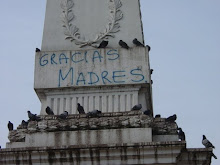
Seven years ago, on March 19, 2003, the United States government sent troops to invade Iraq.

Seven years.

Two thousand five hundred and fifty five days of US-led war on the people of Iraq.

Here's a link to the news story covered by Democracy Now

18 January, 2010

Chileans elected Piñera


The Concertación centrist political alliance has ceded power after a 30 year stint.

Sunday at 11 in the morning, several Ancuditanos waited in lines, according to gender (an esoteric practice enacted during the dictatorship years), to vote for the next president. Chileans faced what I viewed as dismal choices: Frei, the Concertación candidate who already served as president, and Piñera, from the ultra-right political alliance. Chileans decided their political fate for the next four years. The people elected a businessman that owns a third of the island of Chiloé, a television channel, a farmacy chain, an airline, mining interests, forestry interests, and much more.

What has Piñera done so far for the people with all his material wealth? Nothing comes to my mind. He established a private park in the south of Chiloé, but people have to pay to enter, so this limits visitors. The very people who live here on the island cannot pay to enter.

At 6 in the afternoon, we already heard the results of the election. Here in Ancud, many Chileans rode around in their cars waving Piñera flags and honking their horns. People gathered in the plaza and bought champagne to toast the new change that Piñera promised during his campaign. The mayor here in Ancud is also aligned with the ultra-right, so many people believe that the town will receive more monetary resources when Piñera assumes presidency in March.

The most disconcerting moment, for me, occurred when the national news showed the U.S. ambassador to Chile meeting with Piñera five days before elections.

Photos: Signs likening Piñera to Pinochet and warning against "Pinochet disguised as Piñera," Piñera promising change while campaigning in Valdivia, and a political cartoon by Allan McDonald published in Rebelión. "Voy para la otra Moneda" is a play on words: the presidential palace in Santiago is called La Moneda and "Moneda" is slang for money. Given that he is a businessman and millionaire, it is difficult to downplay Piñera's interests as a politician.

26 December, 2009

holiday in uruguay

Uruguay is the most relaxed country I`ve visited so far. To enter the country, I didn´t even have to go through customs. I just handed my passport to the bus attendant the night we left Buenos Aires, and he returned my passport to me the next morning. I wish to write much more, but in the meantime, I`m enjoying the humid climate, the rain, the beach, homemade empanadas, fireflies, motorcycle rides, walks along the Atlantic ocean, and sipping mate all day while spending time with Pedrito and Sandrita`s family. More to come... Happy holidays for everyone. Much love.

14 December, 2009

round one of voting


Sunday evening the Chilean television channels, all about the same, debriefed the first round of voting for the presidential elections. The presidential candidate from the "Together We Can (Junto Podemos)" political alliance, Jorge Arrate, received a worthy 6,21% of the national vote. And, even more impressive, three Communist Party candidates will occupy seats in the parliament. These outcomes represent signficant steps for a country that experienced a sysematic, bloody purge of leftist leaning activists and intellectuals only a few decades ago.

Jorge Arrate taught a seminar at the University of California. He shared stories from his post as ambassador to Argentina during Allende´s Popular Unity government (1979-1973). The photos show propaganda from his campaign, which called on the memory of the protest singer, Víctor Jara, and democratically elected Socialist president, Salvador Allende.

In order for a decisive outcome, a presidential candidate must receive more than 50% of the vote. Hence, Chileans will vote a second time on January 17. This time people will choose between the businessman from the ultra-right political alliance, Piñera, and the Christian Democrat from the center-right incumbent political alliance, Frei. For the record, Piñera owns a major television channel, half the island of Chiloé and other parts of the country, the airline LanChile, and copper mining industries. He´s a multi-millionaire.

Last night Piñera threw a party in a park in downtown Santiago to thank his supporters--many from the working classes. People bought into it. He has appeal, and he´s certainly more charismatic and attractive than Frei, who reminds me of a dinosaur. On the other hand, many people still support the Concertación center-right political alliance that has maintained power since the return of democratic elections in 1990 (following the military dictatorship under General Pinochet). As former diputado (governer equivalent but for a region) in Chile´s Rivers Region, Frei oversaw a project that allowed a timber company to expand, which resulted in the near extinction of black-necked swans native to Valdivia. It seems that either way, national politics will continue to compromise this country´s natural resources.

Still, it´s important to recognize the small triumphs--that more marginalized political parties succeeded in gaining posts and demonstrating presence.

12 December, 2009

summer rain


Today I barely took my laundry down from the line before rain started to fall. I spent the day cooking lunch (lentils and salads), doing laundry, reading, and writing. Here are more pictures from the Villa San Luís neighborhood in Valdivia. Tomorrow Chileans vote in the first round of elections. Most likely there will be another round of voting to elect the next president.

valdivia! que lindo valdivia!


December 10, 2009

After spending the day in Santiago, I felt relieved to leave the city and take a 13-hour bus ride south. The next morning, my colleague met me at the Bus Terminal in Valdivia. The Calle Calle River runs through this city of 140,000 inhabitants. Most streets contain names of German heritage. The German influence also appears through the architecture, including wooden shingles reminiscent of gingerbread houses. Gigantic sea lions sit atop buoys and entertain onlookers at the fish market along the river.

The climate might be most comparable to Seattle, Washington. Now, it mists off and on, a cold wind blows, and clouds cover the sky. Hence, the verdant green of the Valdivian temperate rainforest characterizes this region.

That afternoon, we took a bus to the city of Osorno, 110 km south of Valdvia. We met with the research project’s principal investigator and discussed strategies while looking at a map of Chile’s Lakes Region. The main impetus of the project is to plan coastal resource distribution while taking into account the knowledge of various stakeholders, especially that of artisanal fishing communities.

a day in santiago de chile

December 9, 2009

At 6:00 am grey clouds covered Santiago. By 7:00 am, the sun appeared and illuminated the remaining snow on the Andes Mountains. The highest peak visible from the city, El Plomo, stood out. Supposedly the Inca Empire extended to this point, as archaeologists found a mummified baby at the summit.

The bus from the airport to downtown Santiago charged through weekday morning traffic. Posters, flyers, and all kinds of propaganda related to the upcoming elections added to the chaos. A flashy billboard announced the businessman Piñera as Chile’s new president with the slogan, “We will defeat delinquency.” On the other side of the street, a poster related information about the Revolutionary Left Movement (Movimiento Izquierdo Revolucionário, MIR). At streetlights, hired workers waved flags for Frei, the Christian Democrat candidate. Flyers with the names “Arrate,” the Communist Party candidate, lined walls.

In the working class neighborhood of Pudahuel, trucks filled with family members and sacks of fruits and vegetables made their way to the central market. Girls and boys dressed in school uniforms waited for the bus. Workers on bicycles dodged cars, trucks, buses, and taxis. Thousands of people marched in and out of the metro entrance. Horses attached to carriages ate grass on islands next to the main street, La Alameda. In the same island, people had constructed homes from discarded materials. Dogs ran around chasing each other and looking for food scraps. Old men chatted leisurely next to newspaper kiosks. On the corner of Arica Street and San Borja, a homeless couple warmed bread over a makeshift fire. In downtown Santiago, a vendor sold the summer bounty of Chile’s Central Valley: apricots, cherimoyas, peaches, loquats, strawberries, nectarines, plums, almonds, walnuts, avellanas, and raisins. Street vendors sold 15 Haas avocados for ~$2. The temperature in the city passed 90˚ Farenheit that afternoon.

07 December, 2009

rain!


Quand il pleut, je ne peux pas dormir.

03 December, 2009

lakes, forests, and mountains


These are a few of my favorite things.

full moon

ant party


Sketches from July 2008.

30 November, 2009

giving thanks

Today on the "Connect the Dots" program on Pacifica radio, the host named things she felt thankful for. Here's my working list, in order of what comes to mind:

The quirks and constant support of family
True friends
Physical ability to play, dance, and train to get stronger and more flexible
Mental stamina
Resilience of the human spirit
Sage
Ability to hike a mountain, hear the sound of wind from the summit, and feel awe-struck
Real friends that hold admirable qualities I wish to emulate
Laughter
Spontaneity
A childhood spent raising chickens, climbing trees, and digging to find worms in the soil
My parents and all they sacrificed
Privilege. Lots of it. And the responsibility that comes with my privilege
Full belly
Stimulated mind
Music, listening to and making music
Inventing...writing a story, seeing a project through, creating a piece of art to leave behind
Ability to learn languages and communicate with different people in those languages
Ability to travel, experience different cultures, and visit loved ones
Low points that allow for more reflection
Roof over my head
Endorphins
Adventurous spirit
Random people that make my day a little easier

29 November, 2009

the pacific


This photo shows a view of the port from inside a home in Valparaíso, Chile. I liked the open window.

25 November, 2009

Treasure


Months ago, someone in the apartment complex discarded an old guitar. I had wished for an acoustic, so I embraced the chance to reclaim this instrument.

An abandoned instrument is like a dog you find at the pound--you don't know where it's been, but, most likely, it's experienced some degree of neglect. The guitar's neck had detached from the body. Now that's been treated with some glue and care. I've invested in this instrument. I feel the difference, in attachment, when I play. I can only imagine how it feels to play an instrument made by my own hands, but that's the next project.

Giddy about this magical find, I first held the guitar and felt the weight. Then I cleaned off the dust and dirt. I played the poor strings, and then took the strings off. I sanded the wood down to prepare for painting.

I envisioned the image of a hammer, reminiscent of Víctor Jara's song "El Martillo," inspired by Pete Seeger's song "If I had a Hammer." I painted this image using a real hammer as the model. I left the piece for a while, and when I came back to it, I began painting my arm holding the hammer. I wanted vibrant, bold colors. I added mountains and volcanoes and a sunset. I painted rich, brown earth and monkey puzzle trees.

I covered the painting with more than eight coats of varnish and decisively let the guitar air outside at night. When Bolivians make charangos (tiny, ten-stringed instruments), they let the instrument sit in the high plane for three nights. This way, the instrument takes on the sound of the howling wind. Perhaps this acoustic guitar took on some melancholy from the Pacific Ocean.

It must have, because this acoustic feels just right for singing and playing the blues. I got some bright, copper strings from the music store and referred to a You Tube video to learn how to string an acoustic guitar correctly.

I love the sound. And, I love the feeling of building calluses from holding down the steel strings. Now to record.

19 November, 2009

this is just the beginning


Last night, I didn't sleep well. I kept dreaming that I missed the bus to the University of California (UC) Regents meeting. At 4:25am, I finally got up, boiled water, and drank maté. By 4:40am, I headed toward campus on my bike. The stars in the sky looked beautiful. I wished for a safe and effective visit to UC Los Ángeles. I greeted two students also wearing black (mourning the death of our university) and also meeting the 5am bus to Westwood.

Thirty-five of us students and workers (overwhelmingly people of color) boarded the 5am bus. Our driver, Juanito, got us to UCLA campus by 7am. We, the initial UC Santa Bárbara delegation, walked to Coval Commons, the site of the Regents meeting. A tent city occupied the main lawn on UCLA campus. Last night students from all UC campuses held a Crisis Fest, which included music, art, cooking, and preparation for the second day of protest (November 19).

By 7:10am, students and workers from all over the state began marching outside of Coval Commons building. I soaked up the energy, added my voice to the chants, and took pictures.

At 7:45am I met with an organizer with the University of California Students Association, who prepped me on my role as a 'whiteliner.' Through this position of privilege, I would have the opportunity to speak directly with the Regents and attend the meeting. Another student leader from UCSB also entered the meeting. We both managed to meet and speak with several key people, including Regents, Chancellors, and non-voting officers before the meeting and during breaks.

Explaining that students felt angry and left out of the planning and decision making, I asked Regents what they had done to address the dire situation, besides increasing student fees. Not surprisingly, the individuals skirted the question. One told me to hold the new Chief Financial Officer accountable for increased transparency. Another threw his arms up and said, "What? Don't tell me you think we [the Regents] can do anything." In response, I said, "You hold positions of tremendous power." He nodded, but deferred responsibility to state legislators.

The most receptive Regent I spoke with emphasized the need for a coordinated advocacy group (alumni paired with students) to lobby local legislators in order to prioritize higher education. Regent Leslie Tang Schilling even mentioned the exorbitant state funding spent on the prison industrial complex. I think she felt inclined to speak with me because when I had initially approached her, I thanked her for her family's donation to build the Tang Health Center on the UC Berkeley campus. Still, at the end of the day, this Regent voted to approve the student fee increases.

The day prior, the UC Regent Committee on Finance had already voted to approve the 32% total student fee increases. Today we all expected the Regents to approve the action proposed by President of the UC Regents, Mark Yudof. Before the vote, several students and workers addressed the Regents. Most shared personal experiences, and almost all repeated, "I challenge you, UC Regents, to live up to your responsibility and make the UC accessible and affordable." One student said, "Instead of going to my campus job today to pay toward my increased student fees, I chose to attend this meeting in protest of the increased student fees. UC Regents, what is wrong with this picture?"

Regents curtailed the public commentary time. Several students and workers pleaded for air time. This moment proved especially frustrating for me. The Regents did not want to listen to those most affected by their choices. Police lined up in front of speakers and escorted all the public out of the meeting.

Throughout the entire meeting, students' voices could be heard from the protest outside. The constant background noise of chants did not dissipate. Regents unanimously voted to approve the student fee increases. The Student Regent case the sole vote of disapproval. By 1pm, the Regents had adjourned the meeting. We walked downstairs to exit, where police told us we had to remain in the building. The Regents gathered in the lobby. Student protesters had surrounded all exits of the building, including the underground parking lot. We waited for at least 30 minutes. I took pictures of the protest.

One Regent passed by with four police officers and said, "What is there to be afraid of? It's just a bunch of kids!"

My colleague and I decided to exit. As soon as we got outside, we began informing students. By this time, hundreds of protesters had gathered and maintained a strong line around the entire building.

The police manned the barricades. Around 3pm, the campus police declared the protest unlawful-- anyone still gathered would be arrested. Students maintained the line and kept on chanting. While I did not witness this, I learned that police had escorted remaining Regents out of the building and into a van. Students shouted, "Shame on you!"

The next major step is to channel our anger toward state legislators. A march for education is scheduled for March 31 (César Chávez Day). Students across California from community colleges, California State Universities, UCs, and high schools will converge in Sacramento and demand that accessible, affordable, quality higher education move to the top of our state's priorities.

16 November, 2009

Living it Up in Retirement


I like that my Dad no longer splices cables. Now he has more time to cook, garden, and go fishing. Lately he's been on a tamale-making kick.

On Saturday, November 7, I took a raw chicken carcass to my parents' house. My dad braised the chicken with onion and spices. The next day, we spread masa, from La Central on corn husks. Then we added a bit of chicken and olives, and rolled 'em up. We carefully stacked the tamales and steamed around two dozen. There's not much better than eating and sharing homemade tamales that you make with family.

Sunday we visited the first community garden in Camarillo. Mom and Dad donated the chain-length fence the founders insisted on posting, so my parents get a complimentary plot. Dad helped build the raised beds out of wood. He built his own plot structure, what he's termed "The Alternative," out of concrete cylinders from Grandpa Stan's house.

Mom sent me away with two boxes of Valencia oranges from the trees, homemade cinnamon rolls with raisins and walnuts, and bran muffins. I feel pretty damn lucky. My folks are awesome.

04 November, 2009

Election Day Reflection


Afghan Peace Activist Malalai Joya Speaks on "Crisis and Resistance"

A year ago, Obama stepped in as President of the U.S., with a fanfare characterized by the slogans "Change" and "Hope."

What hope for change do we have?! I certainly do not have hope with the current president, whose foreign policy reminds me more and more of that of his predecessor.

I'm angry. I feel upset about the constant, oppressive backdrop of U.S. occupations in Afghanistan, Iraq, the Palestinian territories, and now Pakistan.

I like what Malalai Joya has to say about the situation in Afghanistan and the role of the U.S. Regarding Obama's recent honor: "[Obama receiving the Nobel Peace Prize is like] giving the peace prize to the President of War."

Listening to Malalai made me feel more angry, but also made me feel more hopeful. With people like this speaking out, and more people listening and acting, we'll get done what the President won't do. "Democracy is not made with bombs and guns." "One country cannot liberate another country."

--
Malalai Joya is one of Afghanistan’s leading democracy activists. In 2005, she became the youngest person ever elected to the Afghan parliament. She was suspended in 2007 for her denunciation of warlords and their cronies in government. She has just written her memoir, “A Woman Among Warlords: The Extraordinary Story of an Afghan Woman Who Dared to Speak Out.”

She spoke in New York at the Northeast Socialist Conference on October 23, 2009.

02 November, 2009

Día de los Muert@s


Today at 18 hours, I happened by a demonstration organized by fellow workers and students on campus. Candles highlighted a large grave site that read "University of California, 1868-2009." White crosses represented moribund services, departments, and institutions: Educational Opportunity Program (EOP), Women's Center, Chican@ Studies, Public Education, Affordable Education, and Accessible Education, among others.
Thirty of us (workers, undergraduate and graduate students, families, and children) gathered with lit candles and reflected on what the University had provided us. Workers shared stories of employment years. One man explained how he had received open-heart surgery with help from health insurance his campus job provided. Students shared personal growth and learning opportunities. I shared how entering the University allowed me the opportunity to study outside the United States, something previously unheard of in my family. I emphasized the importance of such opportunities for students to experience different points of views and expand perspectives, in turn creating more open-minded citizens.
A student facilitated the demonstration in Spanish and English. We passed four tiny bowls around for each person to taste. First, we tasted lemon juice, symbolizing sour experiences. Then, we tasted coffee, or bitter moments, followed by honey, sweet times. Finally, we tasted water--purity.
Following this ritual, we sprinkled the petals of marigolds around the crosses and grave site. The student then sprinkled each of our heads with petals, in order to rid us of the negative energy inherent in the frustration over our dying University.
Later we enjoyed coffee and conchitas, Mexican sweet bread formed in the shape of sea shells. We discussed the transportation to the upcoming University of California Regents meeting at UC Los Angeles on Thursday, November 19. We then walked across campus to view two altars that honored the thousands of women disappeared and murdered in the border city of Juárez, México, as well as more than five thousand people who have died in attempt to cross the México-U.S. border.
Once at home, I set up my own altar to reflect on deaths that have impacted my life. The painting palette belonged to my mother's dad, the grandpa I never met who passed on his artistic talents to me. The Things They Carried book by Tim O'Brian served as the best commemoration currently available to honor my grandpa Gus Elwell, a Navy officer. The full moon provided dramatic lighting for reflection.

01 November, 2009

velas decoradas

Ever since I saw decorated candles at a fun souvenir store devoted to Frida Kahlo paraphernalia on Olvera Street in East Los Angeles, I wanted to make my own decorated candles for Day of the Dead. I bought the candles at a party store on Hollister Ave. in Goleta. Feeling inspired Friday, I cut construction paper and fit the paper around the candle. I sketched some ideas in charcoal. Oil pastels in hand, I transferred the images from my head onto paper. I used double-sided tape to attach the paper onto the candle.
The militant skeleton characterizes Tania la Guerillera. I just finished the highly recommended biography on Tania by Ulises Estrada, so she's on my mind. If you look carefully, you'll see the skeleton wears earrings. The heart on fire with a bleeding wound bound by stitches speaks for itself. Two more candles, green and yellow, await decorating.


day of the dead cartoons


Sketches with charcoal.

Cartoons include Subcomandante Marcos, Mujeres Zapatistas, and Tania la Guerillera (lower right).